
Why the Age of an Office Matters
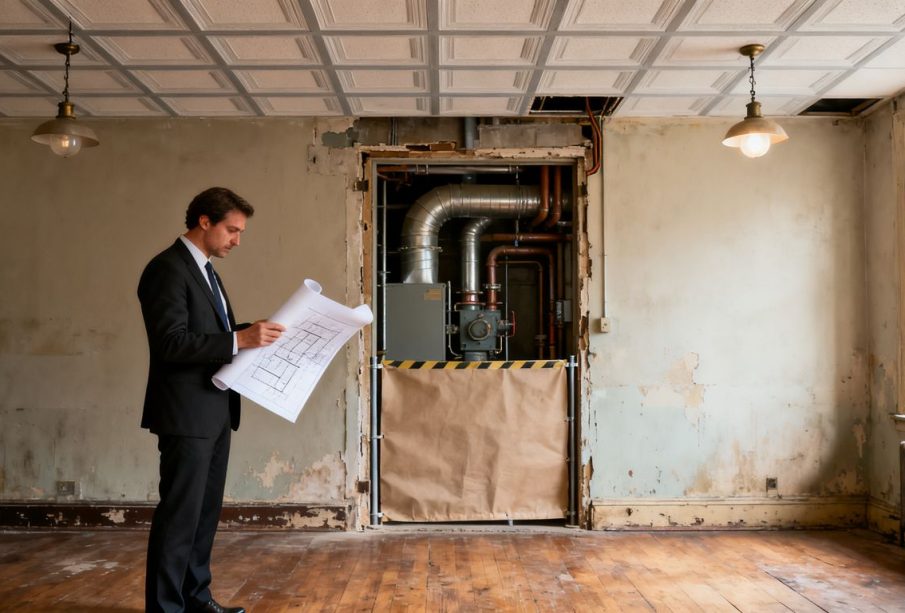
An office completed before 1980 deserves a closer look at its building materials, particularly where original systems remain in service. Age alone does not prove that asbestos is present, but it raises a reasonable question about what was installed and what may have been covered by later renovations. A careful review helps owners and occupants avoid both complacency and unnecessary alarm.
Why older office buildings may contain asbestos
Asbestos was valued for its resistance to heat, fire, and wear, so it appeared in many commercial construction products for decades. Materials installed before modern restrictions may still be in place behind finishes, above ceilings, or around mechanical systems. A useful overview of asbestos in older commercial buildings can help facility teams understand why an older office building asbestos concern warrants professional attention.
Common asbestos-containing materials in commercial properties
Potential locations include thermal insulation around pipes and ducts, floor tiles and adhesives, ceiling tiles, textured finishes, joint compounds, fireproofing, gaskets, and some wall materials. The list is not exhaustive, and similar-looking products may have different compositions depending on their manufacturer and installation date. Mechanical rooms, service chases, suspended ceilings, and areas with older flooring often deserve particular attention.
Why visual inspection cannot confirm asbestos
Asbestos fibers are microscopic, and asbestos-containing products can look much like non-asbestos alternatives. Color, texture, age, or a familiar tile pattern cannot establish what a material contains. Only appropriate sampling followed by laboratory analysis can confirm the result, so staff should not scrape, break, or collect pieces for informal testing.
When building age, renovations, and records change the risk
The original construction date is only one part of the assessment. A partial renovation may have removed materials in one suite while leaving them untouched elsewhere, and new finishes may conceal older layers. Records, maintenance history, and the condition of suspect materials together provide a more useful picture than age by itself.
Check the building’s history and existing records
Before commissioning intrusive work, the building owner or manager should gather whatever information already exists. Drawings, work orders, leases, and renovation files can reveal where materials were added, covered, repaired, or removed. This early step may narrow the inspection scope, but it should not be treated as proof that undocumented areas are safe.
Review construction and renovation documents
Original plans may identify mechanical spaces, floor assemblies, fireproofing, and other locations where suspect materials were used. Later project documents can show whether a ceiling, wall, boiler, or floor was replaced or merely enclosed. Dates matter because a material’s installation period can guide the inspector’s priorities without replacing sampling.
Look for previous asbestos surveys and abatement records
Past surveys may identify materials by location, condition, and assumed or confirmed status. Abatement records may document removal, repair, enclosure, or clearance in a particular area. These records should be checked against present conditions because a report for one renovation phase does not automatically cover every room or later alteration.
Ask property owners, landlords, and facility managers
Tenants should request the building’s available asbestos information from the party responsible for property management. Facility personnel may also know about recurring leaks, damaged insulation, ceiling access, or earlier maintenance incidents that are absent from formal files. Written communication creates a reliable record of what was asked, what was supplied, and what remains uncertain.
Identify areas where building materials have been disturbed
A walk-through can document visible damage without touching suspect materials. Peeling insulation, broken ceiling panels, crumbling fireproofing, lifted flooring, and unsealed service openings should be noted and kept away from routine work until assessed. Photographs taken from a safe distance can help an inspector understand the history and urgency of each location.
Arrange a professional asbestos inspection
A qualified inspection is the point at which suspicion becomes evidence. The scope should reflect the building’s age, planned work, occupancy, and available records rather than relying on a quick visual check. Owners should select an appropriately accredited or licensed professional under the rules that apply in their jurisdiction.
When to request a comprehensive building survey
A comprehensive survey is sensible before major renovation, demolition, or extensive maintenance in an older property. It may also be appropriate when records are missing, several construction phases overlap, or materials are concealed in inaccessible spaces. The inspection should cover areas likely to be disturbed by the proposed work, not just the rooms currently occupied.
What an accredited asbestos inspector evaluates
The inspector typically considers material type, location, accessibility, condition, and the likelihood that planned activities will disturb it. They may review records, examine concealed or accessible building systems, and define where samples are needed. The final report should make clear which materials were sampled, which were assumed, what limitations applied, and what actions are recommended.
How sampling and laboratory analysis work
Sampling should be performed with controls designed to limit fiber release and protect nearby occupants. Small portions are sent to a laboratory using recognized analytical methods, and the written result is matched to the exact sampled location. Until results are available, suspect materials should be treated cautiously rather than presumed harmless.
Situations that require a more detailed inspection
A limited inspection may not be enough when walls, floors, ceilings, or equipment will be opened during construction. Additional attention is warranted after water damage, fire, vibration, accidental impact, or reports of dust from deteriorating materials. Projects that affect multiple floors or building systems should be planned around a survey that reflects the full disturbance area.
Protect occupants while the risk is being assessed
The period between identifying a concern and receiving professional advice calls for practical restraint. The objective is to prevent disturbance and keep any potential contamination from moving through occupied areas. These steps are temporary controls, not a substitute for inspection or formal response.
Stop work that could disturb suspect materials
Maintenance workers should pause drilling, sanding, cutting, scraping, removal, and other tasks affecting suspect materials. Supervisors can preserve the work area and record what activity was underway when the concern arose. Prompt work stoppage reduces avoidable disturbance while the responsible professional determines the next step.
Restrict access to damaged or deteriorating areas
Broken insulation, damaged ceiling products, and crumbling surface treatments should be isolated from ordinary traffic. Doors, barriers, and clear internal instructions can keep employees and visitors from entering until the condition has been evaluated. Staff should not sweep debris or attempt an improvised cleanup.
Prevent dust from spreading through HVAC systems
If a release is suspected, the building team should seek qualified advice about affected ventilation zones before changing system settings. Unplanned use of fans or air movement can spread dust beyond the original area, while shutting down equipment without a coordinated plan can create other building problems. The response should be directed by the inspector or trained abatement professional.
Communicate clearly with employees and visitors
A short, factual notice should explain which area is restricted, what work has stopped, and whom to contact with questions. It should avoid speculation about exposure or promises that have not been supported by testing. Contractors, reception staff, tenants, and emergency personnel all need consistent information about access limitations.
Respond appropriately when asbestos is found
A positive result does not automatically mean that an entire building must be evacuated or that every material must be removed. The appropriate response depends on the material’s condition, location, accessibility, and likelihood of disturbance. Decisions should be documented and made with qualified professionals rather than driven by appearance or panic.
Distinguish between intact and damaged materials
Intact asbestos-containing material may present less immediate concern when it is secured, undisturbed, and unlikely to be affected by routine use. Damaged, friable, or repeatedly contacted material requires more urgent evaluation and stronger controls. Condition can change, so an earlier assessment should be revisited after leaks, impact, vibration, or building work.
Decide when repair, encapsulation, or removal is appropriate
Repair or encapsulation may be suitable when a material can remain safely in place and be managed over time. Removal may be selected when renovation will disturb it, deterioration cannot be controlled, or access makes ongoing management impractical. The decision should consider the work method, future maintenance, occupancy, and applicable regulatory requirements.
Use qualified asbestos abatement professionals
Asbestos disturbance and removal require specialized planning, protective measures, waste handling, and worker training. A property manager should verify the contractor’s credentials, insurance, scope of work, and required notifications before work begins. Ordinary maintenance staff should not be asked to perform abatement simply because the affected area appears small.
Verify clearance before reopening affected areas
After abatement or controlled repair, the area should be inspected and cleared according to the applicable requirements and project plan. Clearance may include visual inspection and, where required, air or other testing by an independent or appropriately qualified professional. Reopening should wait until the documentation supports it, not merely until visible dust has disappeared.
Meet workplace safety and regulatory requirements
Asbestos management is both a health-protection task and a compliance responsibility. Requirements can vary according to the work, material, building use, jurisdiction, and people performing the task. The building owner or employer should obtain current advice from the relevant authorities and qualified safety professionals.
Understand OSHA requirements for asbestos exposure
Employers should review the Occupational Safety and Health Administration rules that address asbestos exposure, regulated work, exposure assessment, controls, protective equipment, training, and recordkeeping. The applicable requirements depend on the type of activity and the classification of the material. A written project plan should identify who is responsible for evaluating and controlling the hazard.
Check EPA, state, and local regulations
Federal requirements may be supplemented by rules from environmental, occupational safety, air-quality, or building authorities. Notification, disposal, licensing, and work-practice requirements can differ by location and project type. Before work starts, the responsible party should confirm which agencies must be contacted and which credentials the contractor must hold.
Maintain required notifications, records, and training
A sound file may include survey reports, laboratory results, contractor qualifications, notifications, waste documentation, clearance records, and employee training information. Records should be easy to retrieve when a new contractor or tenant plans work. Keeping them current prevents a future project from beginning with assumptions based on incomplete history.
Coordinate asbestos work with contractors and tenants
The party arranging work should share relevant survey information and restrictions before contractors price or schedule the job. Tenants should understand how access, noise, ventilation, and temporary relocation will be handled. Coordination reduces the chance that one crew starts work while another party is unaware of a known suspect material.
Prevent future exposure during maintenance and renovations
The safest long-term approach is to make asbestos information part of ordinary building management. A survey that sits in a file will not protect workers if nobody consults it before opening a wall or accessing a ceiling. Procedures should be practical enough for facility staff, tenants, and contractors to use under time pressure.
Create and maintain an asbestos management plan
The plan should identify known or presumed materials, their locations, condition, controls, responsible contacts, and inspection schedule. It should explain how work requests are screened and how changes are recorded after repairs or abatement. A clear management plan turns scattered reports into an operational reference for the whole property.
Inform contractors before drilling, cutting, or demolition
Every work order that could disturb building materials should trigger a review of the relevant survey and management plan. Contractors should receive the information before mobilization, not after tools are on site. If the proposed task falls outside the survey’s scope, work should pause until a qualified professional determines whether additional inspection is needed.
Schedule inspections after damage or major building changes
New damage, leaks, renovations, equipment replacement, or changes to occupancy can alter the risk profile. Follow-up inspections should confirm that controls remain effective and that newly exposed or concealed materials have been addressed. The schedule can be risk-based, with more frequent review in areas subject to access, vibration, or deterioration.
Include asbestos controls in emergency procedures
Emergency plans should explain whom to call after a ceiling collapse, pipe break, fire, or accidental disturbance and how to isolate the area. They should also identify safe communication routes when normal building access is restricted. Practiced procedures help prevent well-intentioned cleanup from turning a localized incident into a wider exposure concern.
A pre-1980 office is not automatically unsafe, but uncertainty should never be handled by guesswork. Reviewing records, arranging a professional survey, controlling access, and maintaining clear work procedures give owners and occupants a measured path forward. The central principle is simple: identify suspect materials before disturbance, then manage or remove them through qualified, documented work.
More Information




-
Everyday Use Of A Mobilepay App For Payments, Recharge, And Transfers
A mobilepay app can bring several everyday digital payment activities into one ... -
-
-
-